
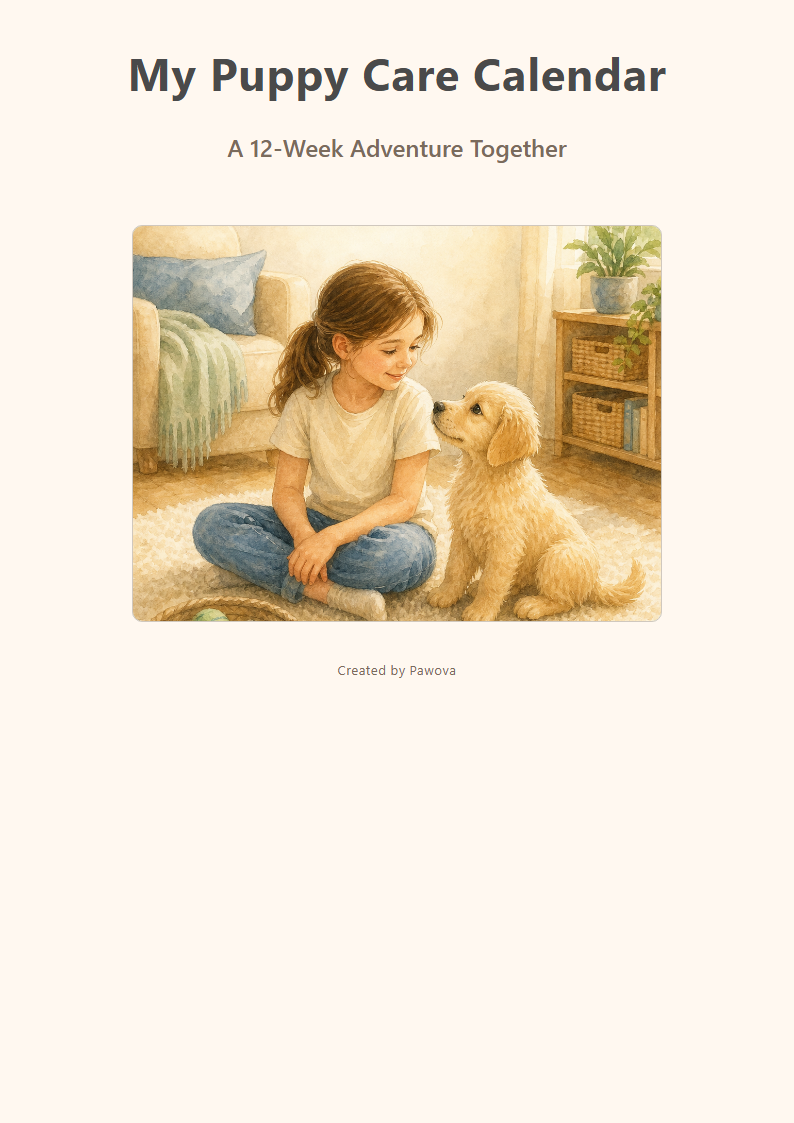
Printable PDF · Ages 5–10
My Puppy Care Calendar
A 12-week family activity that turns caring for a new puppy into a shared practice in noticing, patience, and connection — for your child, and for you.
- 17 printable A4 pages with Letter-safe content
- 12 weekly stories, missions, and daily checklists
- Achievement certificate and parent guide
- Instant digital download after checkout
Adult supervision is required. This calendar supports family participation and does not ask children to train or handle a puppy alone.
Why we made this
A dog is company. That's true for you, too.
Everything about Pawova starts from the same idea: getting a dog is fundamentally about companionship. That's usually easy to remember for the adults in a house. It's easy to forget that it's just as true for a child — that a puppy can be the first relationship they build almost entirely on their own, with someone who needs them back.
This calendar isn't a chore chart, and it isn't only for kids. It's a shared 12-week practice — your child learns to notice another creature's needs, and you get a quiet, structured way to be part of that with them.
How it's built
Written for two readers.
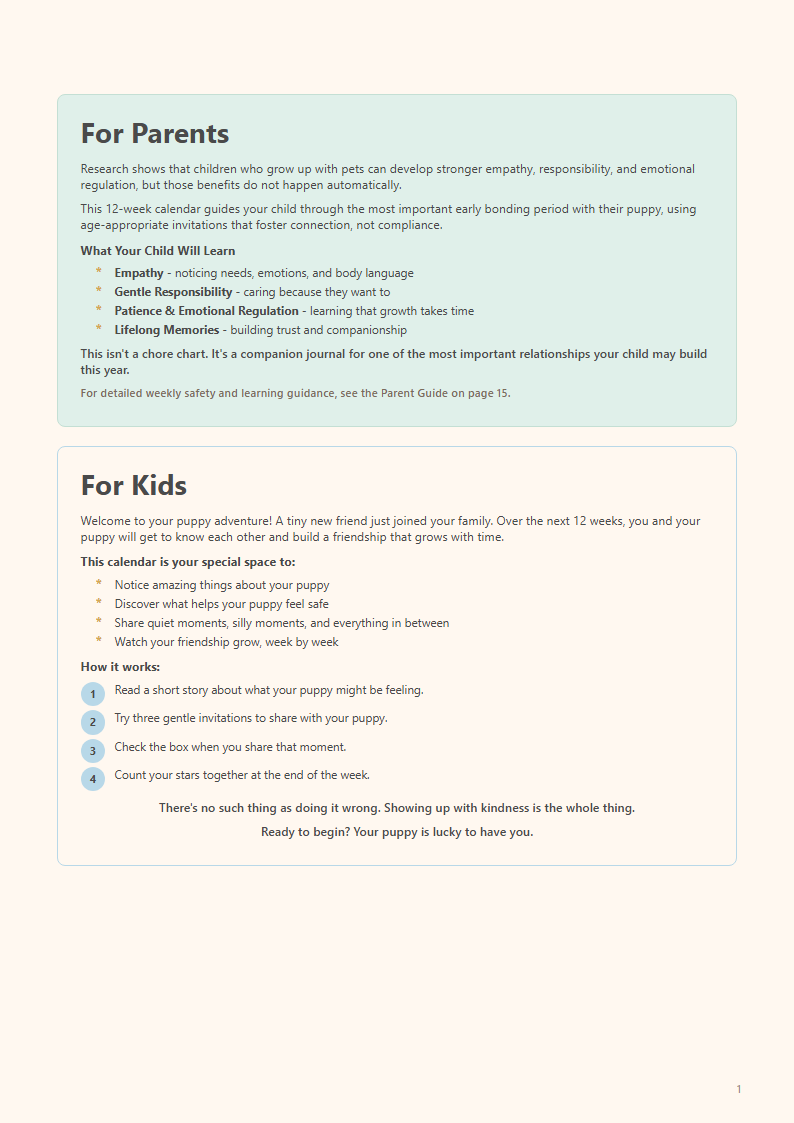
For parents
A short page grounding the calendar in what it's actually for: helping your child build empathy, gentle responsibility, and patience — not compliance. It's explicit about this not being a chore chart, and points to the Parent Guide for the safety and learning context behind each week.
For kids
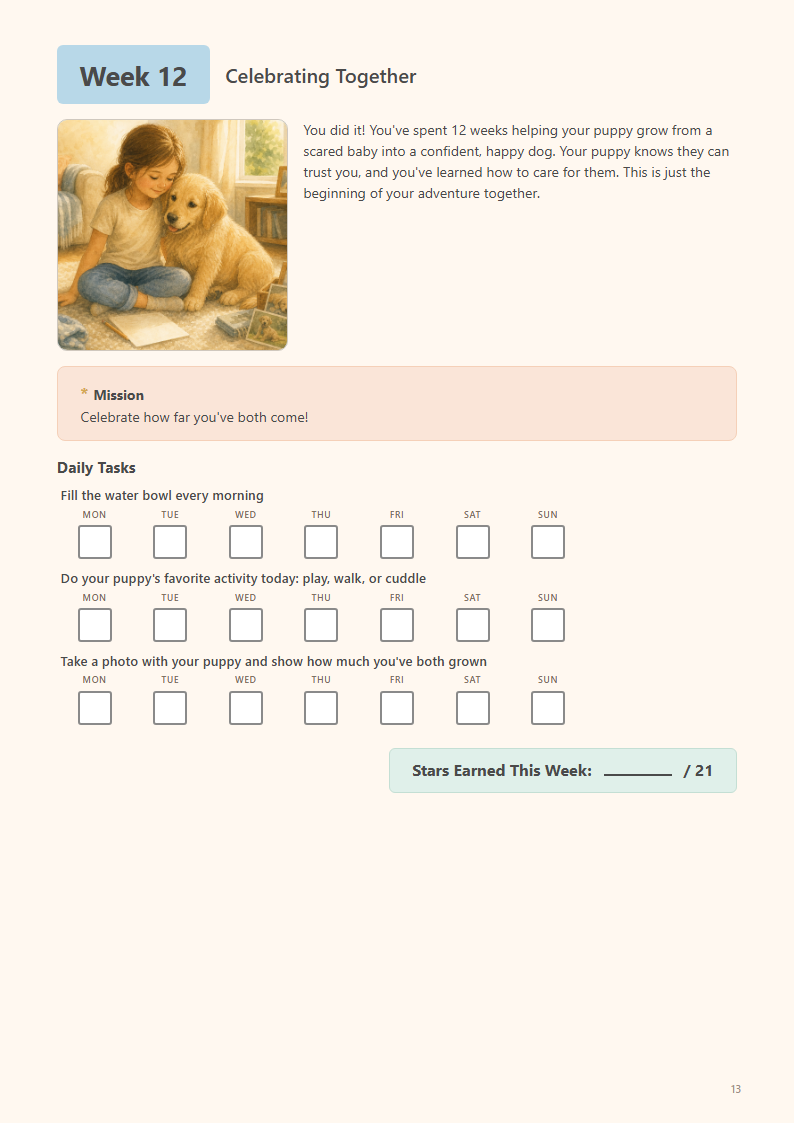
Each week opens with a short story about what the puppy might be feeling, then offers three gentle invitations to connect — not a checklist to finish perfectly. The calendar says it outright: "There's no such thing as doing it wrong. Showing up with kindness is the whole thing."
Twelve weeks, three chapters
The relationship changes. So does the calendar.
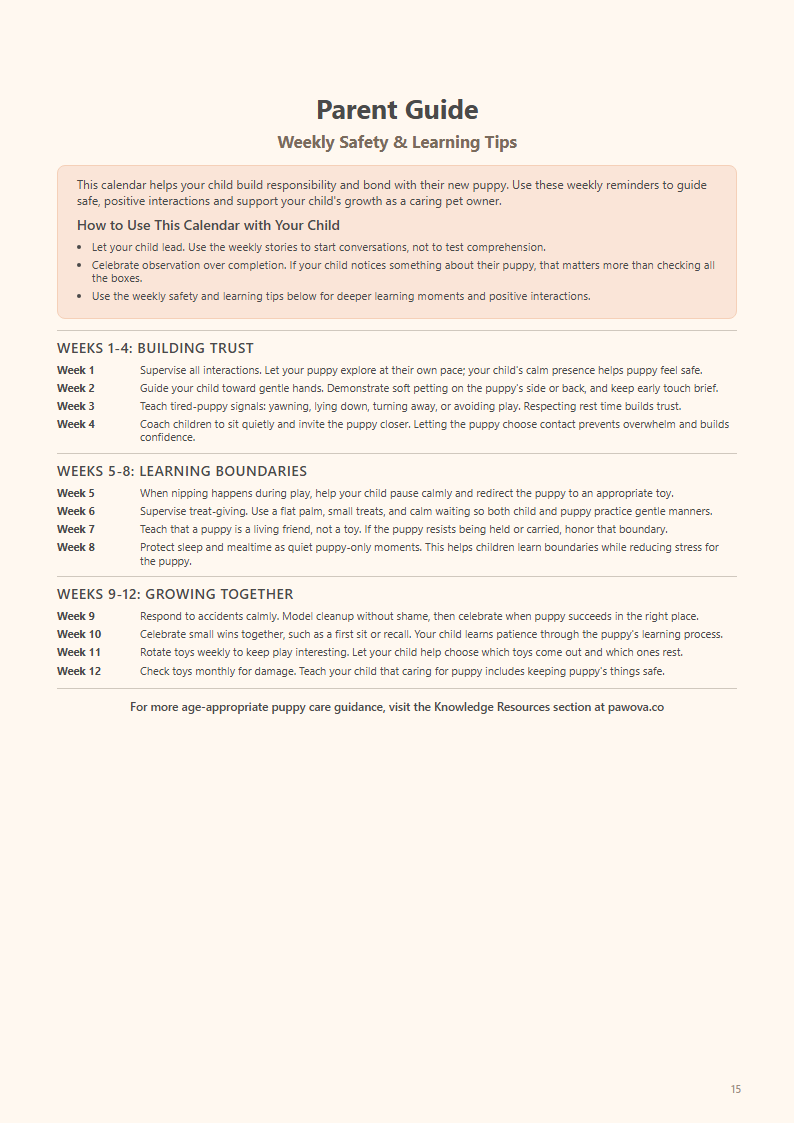
Each week's mission is tied to a real stage of a puppy's early adjustment — not a random daily task list. A few examples, taken directly from the Parent Guide:
Building Trust
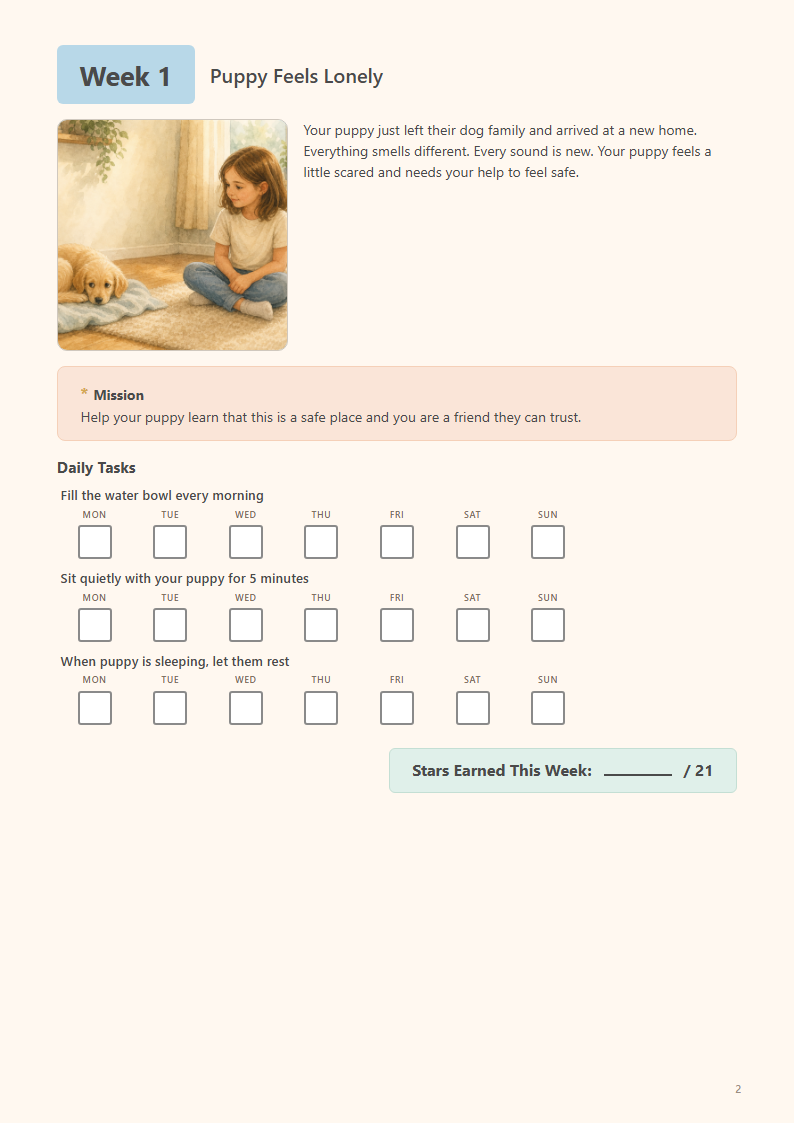
Week 1's mission is simply helping the puppy learn this is a safe place. By Week 4, kids are coached to sit quietly and let the puppy choose to come closer — contact on the puppy's terms, not theirs.
Learning Boundaries
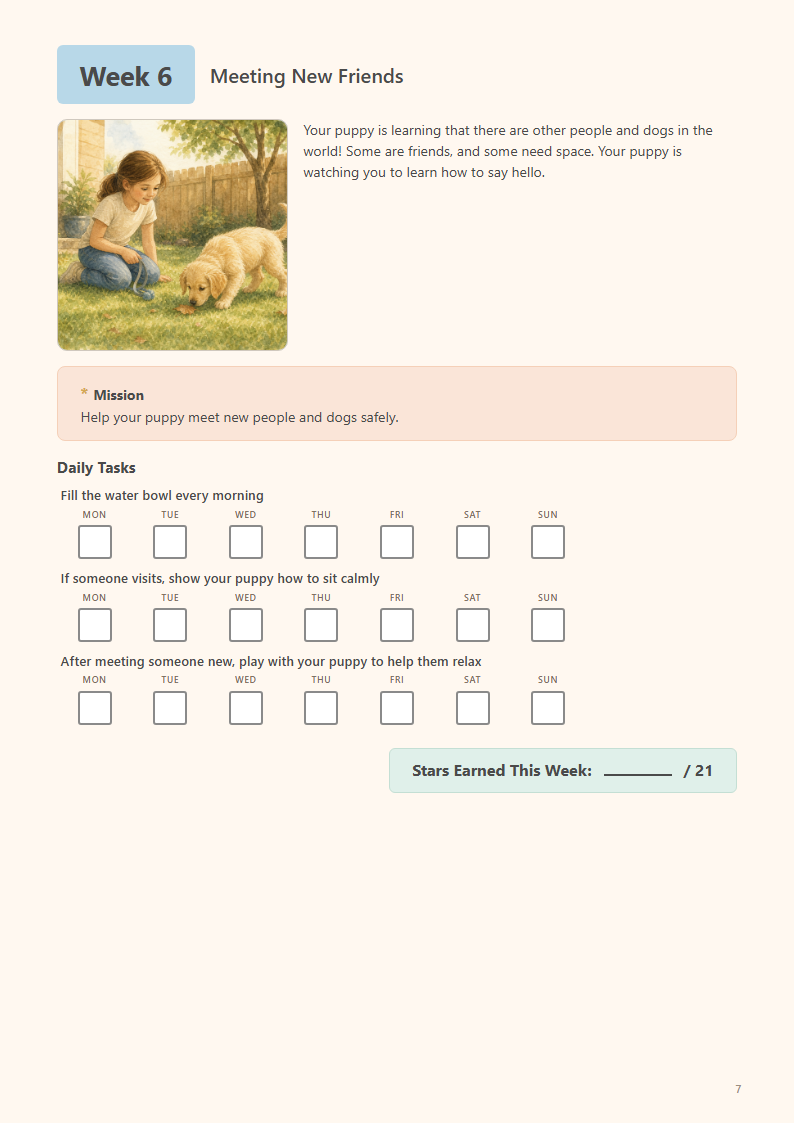
Week 7 teaches something a lot of adults never learn either: "a puppy is a living friend, not a toy — if the puppy resists being held or carried, honor that boundary." Week 8 protects the puppy's sleep and mealtimes as quiet, off-limits moments.
Growing Together
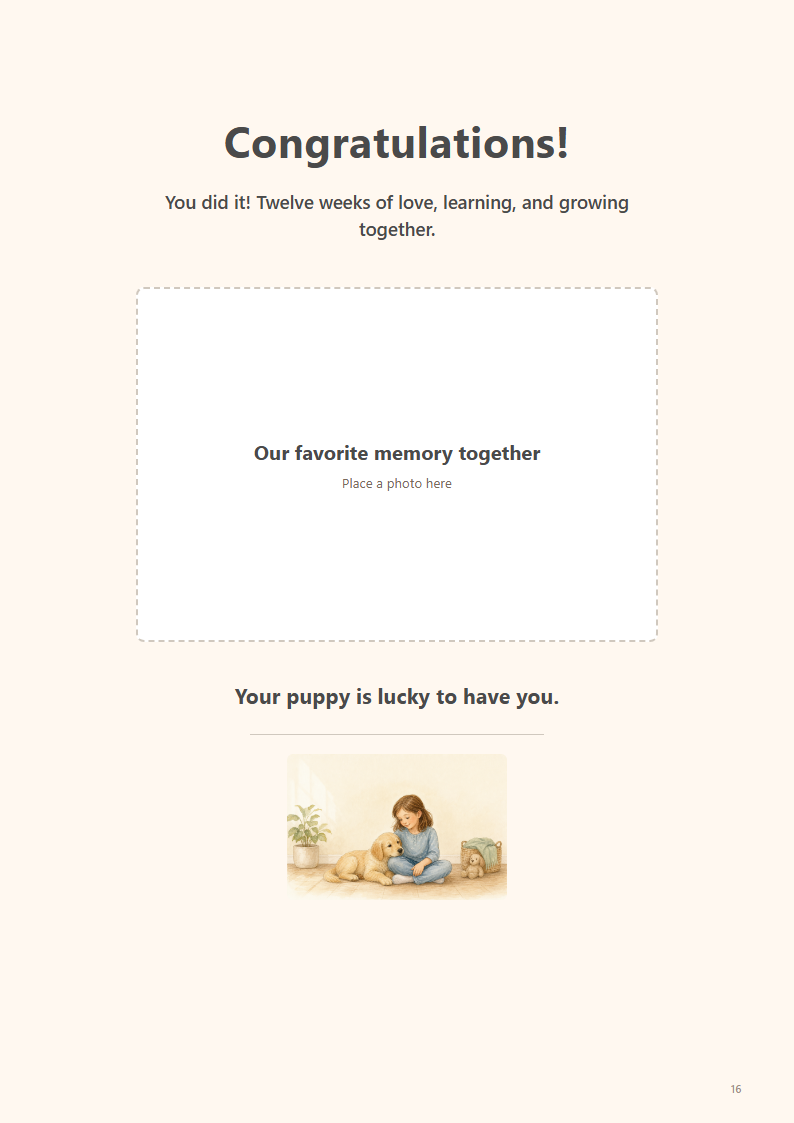
By Week 9, accidents get met calmly, without shame. Week 12 closes with a shared celebration of how far both puppy and child have come — the certificate at the end totals every star earned across all twelve weeks.
Actual PDF pages
Know exactly what you are downloading.
Best paired with
Welcome Kit Standard
If your family is just starting this adventure, the Welcome Kit is the physical side of it — the harness, the ID tag, the frame that marks the day your dog joined the family. This calendar is the part that unfolds over the following twelve weeks.
Shop Welcome Kit Standard →Share your story
What did your child notice, twelve weeks in?
If this calendar became part of your family's story — something your child said, a moment they noticed, how the two of them changed together — we'd genuinely like to hear it. A few stories are featured on our Journal, with permission. Send yours to hello@pawova.co.
Before you buy
Simple answers for families.
What do I receive?
One complete 17-page PDF containing the cover, instructions, twelve weekly pages, certificate, parent guide, and congratulations page.
Can I print it on US Letter paper?
The PDF is A4, with important content kept inside a Letter-safe area. Choose “Fit to printable area” in your printer settings.
Can my child use it alone?
No. The activities are designed for children ages 5–10 with active adult supervision and should be adapted to the child and puppy.
Does my child need to complete every box?
No. The calendar itself says so directly: there's no such thing as doing it wrong. Missed days and half-finished weeks are normal — noticing and showing up matters more than a perfect streak.
Is this just an activity for kids?
The daily boxes are for your child, but the calendar works because a parent is reading the weekly stories with them and using the Parent Guide alongside it. It's designed as something you do together, not something you hand off.